Ever wondered how much your cloud setup will cost? The AWS Calculator is your ultimate tool for predicting and optimizing cloud expenses with precision and confidence.


What Is the AWS Calculator and Why It Matters

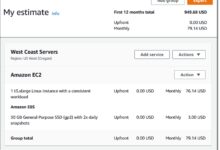
The AWS Calculator, officially known as the AWS Pricing Calculator or AWS Cost Calculator, is a free online tool provided by Amazon Web Services (AWS) to help users estimate the cost of using AWS services. Whether you’re launching a small web app or migrating an entire enterprise infrastructure, this tool gives you a clear financial forecast before you spend a single dollar.
Understanding the Core Purpose of the AWS Calculator
The primary goal of the AWS Calculator is to eliminate financial uncertainty in cloud planning. Unlike traditional on-premise IT, where costs are often fixed and predictable, cloud computing operates on a pay-as-you-go model. This flexibility is powerful but can lead to unexpected bills if not managed properly.
- Enables accurate budget forecasting
- Supports comparison between different AWS service configurations
- Helps identify cost-saving opportunities early in the planning phase
By inputting details such as instance types, data transfer volumes, storage needs, and usage duration, users can generate detailed cost estimates across hundreds of AWS services—from EC2 and S3 to Lambda and RDS.
“The AWS Calculator transforms guesswork into strategy. It’s not just about numbers; it’s about making informed decisions.” — Cloud Economics Expert, 2023
How the AWS Calculator Fits Into Cloud Financial Management
In today’s cloud-first world, financial governance is no longer the sole responsibility of finance teams. DevOps engineers, architects, and project managers must also understand cost implications. The AWS Calculator plays a foundational role in FinOps (Financial Operations), a growing discipline focused on bringing financial accountability to cloud spending.
Using the calculator early in the design phase ensures that cost is treated as a first-class constraint—just like performance, security, and scalability. This proactive approach prevents costly re-architecting later and aligns technical decisions with business objectives.
For example, choosing between On-Demand, Reserved, or Spot Instances can drastically affect your monthly bill. The AWS Calculator allows you to model these options side by side, giving stakeholders a transparent view of trade-offs.
Key Features of the AWS Calculator That Save You Money
The AWS Calculator isn’t just a simple price lookup tool—it’s a sophisticated modeling environment with features designed to reflect real-world usage patterns and optimize spending.
Service-Specific Cost Modeling
One of the most powerful aspects of the AWS Calculator is its ability to model costs at the service level. You can build estimates for individual services like Amazon EC2, S3, DynamoDB, or AWS Lambda, or combine multiple services into a single, comprehensive project.
Each service comes with customizable parameters. For EC2, you can select instance families (e.g., T3, M5, C5), operating systems, tenancy models, and purchasing options. For S3, you can define storage classes (Standard, Intelligent-Tiering, Glacier), request rates, and data retrieval frequency.
This granularity ensures your estimate closely mirrors your actual deployment scenario. It also helps uncover hidden costs—like data egress fees or API request charges—that are easy to overlook but can add up quickly.
Multi-Region and Multi-Account Support
Modern applications often span multiple AWS regions for redundancy, latency reduction, or compliance. The AWS Calculator allows you to model deployments across different geographic regions, each with its own pricing structure.
- Compare costs between US East (N. Virginia) and EU (Frankfurt)
- Estimate data transfer costs between regions
- Model global content delivery using Amazon CloudFront
Additionally, if your organization uses multiple AWS accounts (e.g., for dev, staging, and production), the calculator lets you create separate estimates or consolidate them into a unified view. This is especially useful for enterprises managing complex cloud environments.
Export and Share Functionality
Once you’ve built your estimate, the AWS Calculator allows you to export it as a CSV file or share it via a secure link. This feature is invaluable for collaboration.
Imagine a scenario where a solutions architect creates a cost model and shares it with the finance team for budget approval. The shared link shows all assumptions, configurations, and total monthly cost—no miscommunication, no surprises.
Moreover, exported data can be integrated into financial planning tools like Excel or Google Sheets, enabling deeper analysis and long-term forecasting.
Step-by-Step Guide to Using the AWS Calculator
Using the AWS Calculator doesn’t require advanced technical skills, but following a structured approach ensures accuracy and completeness.
Step 1: Access the AWS Calculator
Go to the official AWS Pricing Calculator website. No login is required to start building estimates, though signing in with your AWS account allows you to save and manage projects.
The interface is clean and intuitive. You’ll see options to create a new estimate for a specific service or start from scratch with a blank canvas. For beginners, AWS offers pre-built templates for common use cases like “Web Application,” “Data Lake,” or “Disaster Recovery.”
Step 2: Define Your Workload
Begin by selecting the AWS services you plan to use. For a typical web application, this might include:
- Amazon EC2 for compute
- Amazon RDS for database
- Amazon S3 for storage
- Amazon CloudFront for content delivery
- AWS Lambda for serverless functions
For each service, specify usage details. For EC2, choose:
- Instance type (e.g., t3.medium)
- Operating system (Linux, Windows, etc.)
- Number of instances
- Average daily usage (hours per day)
- Region (e.g., us-east-1)
- Purchasing option (On-Demand, Reserved, or Spot)
The more accurate your inputs, the more reliable your estimate.
Step 3: Refine and Optimize
After entering basic configurations, review the cost breakdown. The calculator displays monthly and annual estimates, often highlighting the most expensive components.
This is where optimization begins. Ask questions like:
- Can I use a smaller instance type?
- Would Reserved Instances save 40% over On-Demand?
- Is my storage tier optimal, or should I use S3 Intelligent-Tiering?
Adjust parameters and watch how costs change in real time. This iterative process helps you find the sweet spot between performance and cost.
“I reduced my projected cloud bill by 32% just by tweaking instance types and enabling Reserved Instances in the AWS Calculator.” — DevOps Lead, Tech Startup
Advanced Strategies for Maximizing the AWS Calculator
While basic use of the AWS Calculator is straightforward, advanced users can leverage it for strategic planning and long-term cost governance.
Modeling Reserved Instances and Savings Plans
One of the biggest cost-saving opportunities in AWS is committing to long-term usage through Reserved Instances (RIs) or Savings Plans. The AWS Calculator allows you to model these commitments and see potential savings.
For example, if you run a production database 24/7, committing to a 1-year or 3-year Reserved Instance can reduce costs by up to 75% compared to On-Demand pricing. The calculator shows both the upfront and ongoing costs, helping you evaluate ROI.
Savings Plans offer even more flexibility, applying discounts across multiple services (e.g., EC2, Fargate, Lambda). You can model different commitment levels ($10/hour, $50/hour) and see how they impact your total bill.
Simulating Auto-Scaling and Variable Workloads
Not all workloads are static. Many applications experience traffic spikes—e.g., during sales events or marketing campaigns. The AWS Calculator lets you simulate variable usage patterns.
You can define:
- Different usage levels for peak vs. off-peak hours
- Auto-scaling group behavior (min, max, and desired instance count)
- Load balancer request rates
By modeling these fluctuations, you avoid over-provisioning and ensure your cost estimate reflects real-world dynamics.
Integrating with AWS Cost Explorer and Budgets
The AWS Calculator is a planning tool, but once your resources are live, you need monitoring. This is where AWS Cost Explorer and AWS Budgets come in.
While the calculator helps you predict costs, Cost Explorer analyzes actual usage and spending trends. You can compare your initial estimate from the AWS Calculator with real data from Cost Explorer to assess accuracy and identify variances.
AWS Budgets allows you to set custom cost and usage thresholds. If your actual spending exceeds the estimate by 10%, you can receive alerts via email or SNS. This closed-loop system—plan with the calculator, monitor with Cost Explorer, and alert with Budgets—forms the backbone of effective cloud cost management.
Common Mistakes to Avoid When Using the AWS Calculator
Even experienced users can make errors that lead to inaccurate estimates. Being aware of common pitfalls can save you from budget overruns.
Underestimating Data Transfer Costs
Data transfer is one of the most overlooked cost components. While inbound data to AWS is free, outbound data (egress) is charged—sometimes at high rates, especially when transferring between regions or to the internet.
For example, transferring 10 TB of data from S3 to users over the internet in the US East region costs approximately $900 per month. If your application serves large media files, this can quickly become a major expense.
Solution: Use Amazon CloudFront to cache content at edge locations. The AWS Calculator includes CloudFront pricing, so model it alongside your origin services.
Ignoring Free Tier Limits
AWS offers a generous Free Tier for new accounts, including 750 hours of EC2 t2.micro instances and 5 GB of S3 storage per month for 12 months. However, once you exceed these limits, standard pricing applies.
A common mistake is building an estimate that assumes free usage beyond the allowed limits. Always verify whether your projected usage falls within Free Tier boundaries—especially for startups and developers testing ideas.
The AWS Calculator does not automatically apply Free Tier discounts, so you must manually adjust estimates if you’re within the first year of your AWS account.
Overlooking Indirect or Hidden Costs
Some AWS services have indirect costs that aren’t immediately obvious. Examples include:
- ELB (Elastic Load Balancer) hourly charges + request fees
- NAT Gateway hourly cost + data processing fee
- EBS snapshot storage costs
- CloudWatch Logs ingestion and retention
These may seem small individually, but collectively they can add hundreds of dollars to your monthly bill. Always include all components of your architecture in the AWS Calculator, no matter how minor they seem.
Alternatives and Complementary Tools to the AWS Calculator
While the AWS Calculator is the official and most accurate tool for estimating AWS costs, several third-party tools offer additional features and integrations.
Third-Party Cost Estimation Tools
Tools like CloudHealth by VMware, Datadog Cloud Cost Management, and Kubecost provide advanced analytics, multi-cloud support, and real-time cost monitoring.
These tools often integrate directly with your AWS account, pulling actual usage data to refine estimates. They also offer features like anomaly detection, chargeback/showback, and Kubernetes cost allocation—capabilities beyond the scope of the AWS Calculator.
However, they typically require setup and may involve additional costs. For initial planning, the AWS Calculator remains the best starting point.
AWS Simple Monthly Calculator (Legacy Tool)
You might come across references to the “AWS Simple Monthly Calculator,” a legacy tool that was retired in 2021. It has been fully replaced by the current AWS Pricing Calculator.
If you’re using outdated guides or tutorials, ensure you’re referring to the correct tool. The new calculator is more powerful, user-friendly, and regularly updated with the latest pricing and services.
Using Terraform and Infrastructure-as-Code for Cost Simulation
For teams using Infrastructure-as-Code (IaC), tools like Terraform can be paired with cost estimation plugins such as Infracost.
Infracost integrates with Terraform to provide cost estimates directly in pull requests. It uses the same pricing data as the AWS Calculator but applies it to your actual IaC configuration.
This approach bridges the gap between planning and deployment, ensuring that every code change includes a cost impact assessment—making the AWS Calculator’s insights part of your CI/CD pipeline.
Real-World Use Cases of the AWS Calculator
The true value of the AWS Calculator becomes evident when applied to real-world scenarios. Let’s explore a few practical examples.
Startup Launching a SaaS Platform
A startup building a SaaS product used the AWS Calculator to estimate costs for their MVP (Minimum Viable Product). They modeled:
- 2x t3.small EC2 instances behind an ALB
- 1x db.t3.medium RDS instance
- 50 GB of S3 storage
- 1 TB of monthly data transfer
The calculator showed a monthly cost of $187. This helped them secure seed funding with a clear financial model. As they scaled, they revisited the calculator to evaluate Reserved Instances and Savings Plans, reducing costs by 40%.
Enterprise Migrating On-Premise Workloads
A large enterprise planning a cloud migration used the AWS Calculator to compare on-premise TCO (Total Cost of Ownership) with AWS. They inputted:
- 100 virtual machines (mapped to EC2 instances)
- 50 TB of file storage (mapped to EFS and S3)
- Disaster recovery setup with cross-region replication
The estimate revealed a 30% cost reduction over five years, factoring in hardware refresh cycles and maintenance. The detailed breakdown was presented to executives, accelerating approval for the migration project.
E-Commerce Site Preparing for Black Friday
An e-commerce company used the AWS Calculator to model peak traffic scenarios. They estimated:
- Auto-scaling from 5 to 50 EC2 instances during peak hours
- Increased RDS read replicas
- Higher CloudFront data transfer volumes
The tool projected a 3x increase in daily costs during the event. Armed with this data, they set up temporary Budgets alerts and pre-purchased Reserved Instances for baseline capacity, avoiding bill shock.
What is the AWS Calculator?
The AWS Calculator is a free online tool by Amazon Web Services that helps users estimate the cost of using AWS cloud services based on their specific configuration and usage patterns.
Is the AWS Calculator accurate?
Yes, the AWS Calculator uses real-time pricing data from AWS and is highly accurate for planning purposes. However, actual costs may vary slightly due to usage fluctuations, taxes, or unmodeled services.
Can I save my estimates in the AWS Calculator?
Yes, if you’re signed in to your AWS account, you can save, name, and organize multiple estimates for future reference and sharing.
Does the AWS Calculator include Free Tier discounts?
No, the AWS Calculator does not automatically apply Free Tier discounts. Users must manually adjust estimates if they are within the first 12 months of their AWS account.
How often is the AWS Calculator updated?
The AWS Calculator is updated regularly to reflect the latest pricing changes, new services, and feature enhancements across the AWS ecosystem.
Mastering the AWS Calculator is essential for anyone using or planning to use Amazon Web Services. It empowers you to make data-driven decisions, avoid unexpected costs, and optimize your cloud investments. From startups to enterprises, this tool provides clarity, control, and confidence in your cloud journey. Whether you’re estimating a simple website or a global-scale application, the AWS Calculator should be your first step toward financial transparency in the cloud.
Further Reading: